
Cacio e pepe: everything you need to know about this Roman classic
Here’s the story behind cacio e pepe, the secret to getting that famously creamy sauce right, and a few ways to take it beyond the pasta bowl.
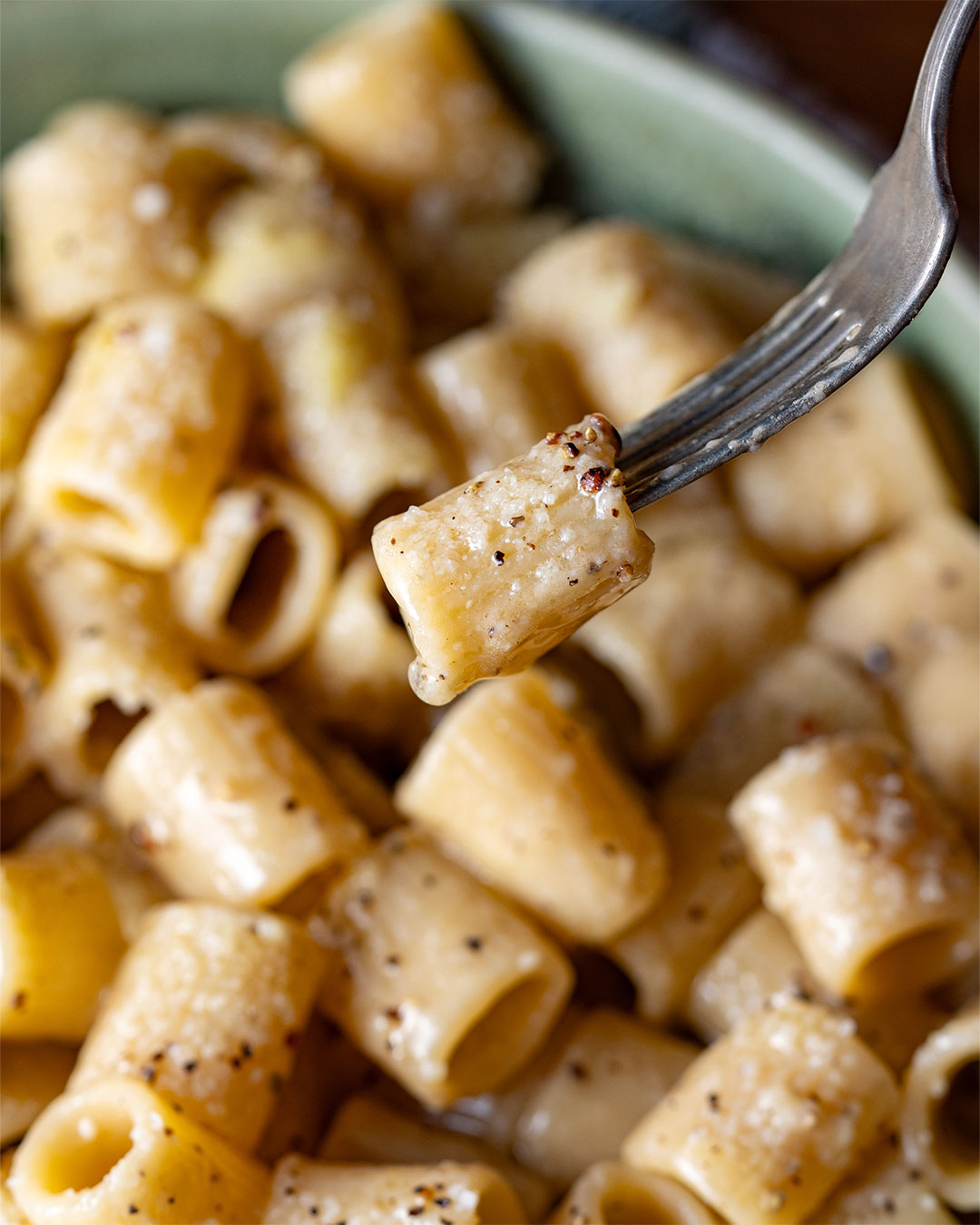
Cacio e pepe: three ingredients, plenty of character
In Rome, some dishes are simply part of the scenery.
Carbonara. Amatriciana. Gricia. Zozzona. And, of course, cacio e pepe.
On paper, it couldn’t be much simpler: pasta, Pecorino Romano and black pepper. Three ingredients and basta.
But as is so often the case with Italian cooking, the fewer ingredients you have, the fewer places there are to hide. Great cacio e pepe should be creamy without containing cream, peppery without overpowering the Pecorino, and silky enough to coat the pasta without drowning it.
That’s where things get a little tricky.
Because between three ingredients and a bowl of cacio e pepe worthy of a Roman trattoria, there’s one fairly important thing: technique.
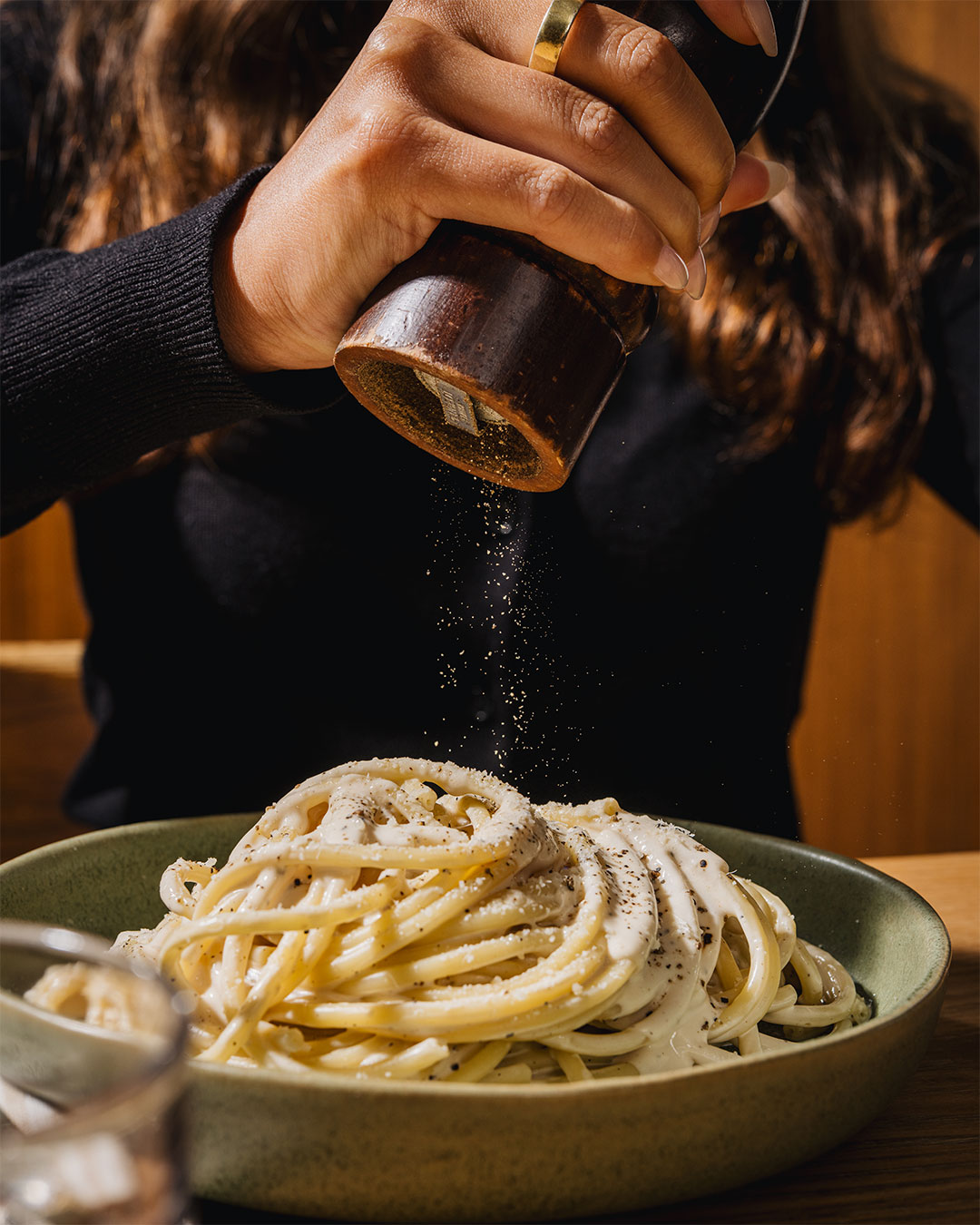
What does “cacio e pepe” actually mean?
No mystery here. Cacio e pepe simply means “cheese and pepper.”
Cacio is an old Italian word for cheese, particularly common in central and southern Italy, while pepe means pepper.
And not just any cheese will do. Traditionally, the dish is made with Pecorino Romano, a firm sheep’s milk cheese with a bold, salty and slightly sharp flavour.
Cheese. Pepper. Pasta.
Rome understood less is more long before the rest of us.

Where does cacio e pepe come from?
Like many of Italy’s great culinary classics, the exact origins of cacio e pepe are difficult to pin down. But one story gets told again and again.
To find it, we have to leave Rome for a moment and head into the countryside of Lazio.
The story goes that shepherds travelling through the region with their flocks carried foods that could easily survive the journey: dried pasta, aged Pecorino and black pepper. Nothing fragile, nothing complicated to transport and, most importantly, everything they needed to make a warm, filling meal.
Add a little pasta cooking water and suddenly those three ingredients become much more than the sum of their parts.
Over time, the dish is said to have travelled from the countryside into the taverns and trattorias of Rome.
Apparently, the Romans decided to keep it.
Today, cacio e pepe sits alongside carbonara, gricia and amatriciana as one of the great classics of Roman cooking.

Pecorino Romano: the star of cacio e pepe
When you’re working with only a handful of ingredients, there’s nowhere to hide. The cheese matters. A lot.
Pecorino Romano PDO is made from sheep’s milk and has a salty, bold and slightly sharp flavour that gives cacio e pepe much of its character. Its history reaches back to ancient Rome, and its production is now protected by a designation of origin.
And despite what the name might suggest, Pecorino Romano isn’t made exclusively around Rome. Its PDO production area now includes Lazio, Sardinia and the province of Grosseto in Tuscany.
For cacio e pepe, a more mature Pecorino Romano intended for grating is particularly well suited to the job. It’s firmer and drier than younger table versions, with the concentrated salty, savoury flavour this dish needs.
And while we’re talking cheese: grate it finely. Really finely.
Big shreds have a much harder time melting into the pasta water. That’s often how you end up staring at a perfectly good bowl of pasta decorated with stubborn little Pecorino clumps.
Still edible? Obviously.
The cacio e pepe of your Roman dreams? Not quite.

The real secret to cacio e pepe is the emulsion.
This is where those three little ingredients start demanding a bit more attention.
Traditional cacio e pepe contains no cream. All that creaminess comes from bringing Pecorino together with starchy pasta cooking water.
That cloudy water we’re all a little too quick to pour down the drain? Here, it’s essential.
The starch helps the cheese and water come together into a smooth, glossy sauce that coats the pasta. The water also seasons the dish, so yes, you still want to salt it — just with a lighter hand than usual. Pecorino Romano brings plenty of salt on its own, and it’s much easier to add salt than take it away.
So, just this once, you have our permission to ignore the old “pasta water should taste like the sea” rule.
Temperature matters too. If the pasta or pan is too hot when the Pecorino goes in, the cheese can seize and clump instead of melting into a smooth emulsion.
A little patience goes a long way: finely grated Pecorino, sufficiently starchy water and gentle, controlled heat.
Not exactly complicated. But not quite foolproof either.

And what about the pepper?
With all this talk about Pecorino, it’s easy to forget the other half of the name. Don’t.
Black pepper isn’t just a garnish here. It brings warmth, aroma and that unmistakable peppery bite that balances the richness of the cheese.
One traditional approach is to lightly toast whole black peppercorns in a dry pan before crushing them. A little heat wakes up their aroma and makes the pepper much more expressive.
How you grind it changes things too. Coarsely crushed pepper gives you more texture and little bursts of flavour, while a finer grind disperses more evenly throughout the sauce.
When you’re cooking with three ingredients, small details become pretty big details.
And that might be exactly why we love cacio e pepe so much.
There’s almost nothing in it. But when everything comes together? Mamma mia!

What pasta should you use for cacio e pepe?
Ask a few Romans and there’s a good chance you’ll get a few different answers.
Tonnarelli, a thick, long pasta associated with Roman cooking, is a classic. Spaghetti is another popular choice.
We also have a soft spot for bucatini.
They’re thicker than spaghetti, hollow through the middle and very good at making a generous sauce even more fun to eat.
Rigatoni, mezze maniche and other short pasta shapes can work beautifully too.
We’re not about to start a pasta war over it.

Traditional… or not?
Here’s where things get interesting.
Traditional cacio e pepe comes down to three essentials: pasta, Pecorino Romano and black pepper, with pasta cooking water bringing everything together into a creamy emulsion.
No cream.
But recipes travel. Kitchens evolve. Classics get reinterpreted.
And that’s exactly what made us want to create our own version.

Rome in a jar: Stefano cacio e pepe sauce
We love making cacio e pepe the traditional way.
What we love slightly less is keeping an eye on pasta temperature, starch levels and Pecorino’s willingness to cooperate on a Tuesday night when everyone is hungry.
So we asked ourselves a pretty simple question: how could we capture the spirit of cacio e pepe in a rich, creamy sauce that’s ready in minutes?
That’s how our new Stefano Cacio e Pepe Sauce came to be.
Our take on this Roman classic brings together Pecorino Romano PDO, freshly ground black pepper and a generous amount of cream for a sauce that’s rich, creamy and unapologetically peppery.
Is it the traditional recipe you’d eat in a Roman trattoria? No.
Is it inspired by one of our favourite things to eat when we’re in Rome? Absolutely.
And there’s no Pecorino to convince to emulsify.
Heat it. Toss it with pasta. Eat. Buon appetite!
What can you make with our cacio e pepe sauce?
The obvious answer: pasta.
And frankly, a bowl of al dente bucatini with a generous helping of sauce and some freshly grated Pecorino on top does the job beautifully.
But we weren’t going to stop there.
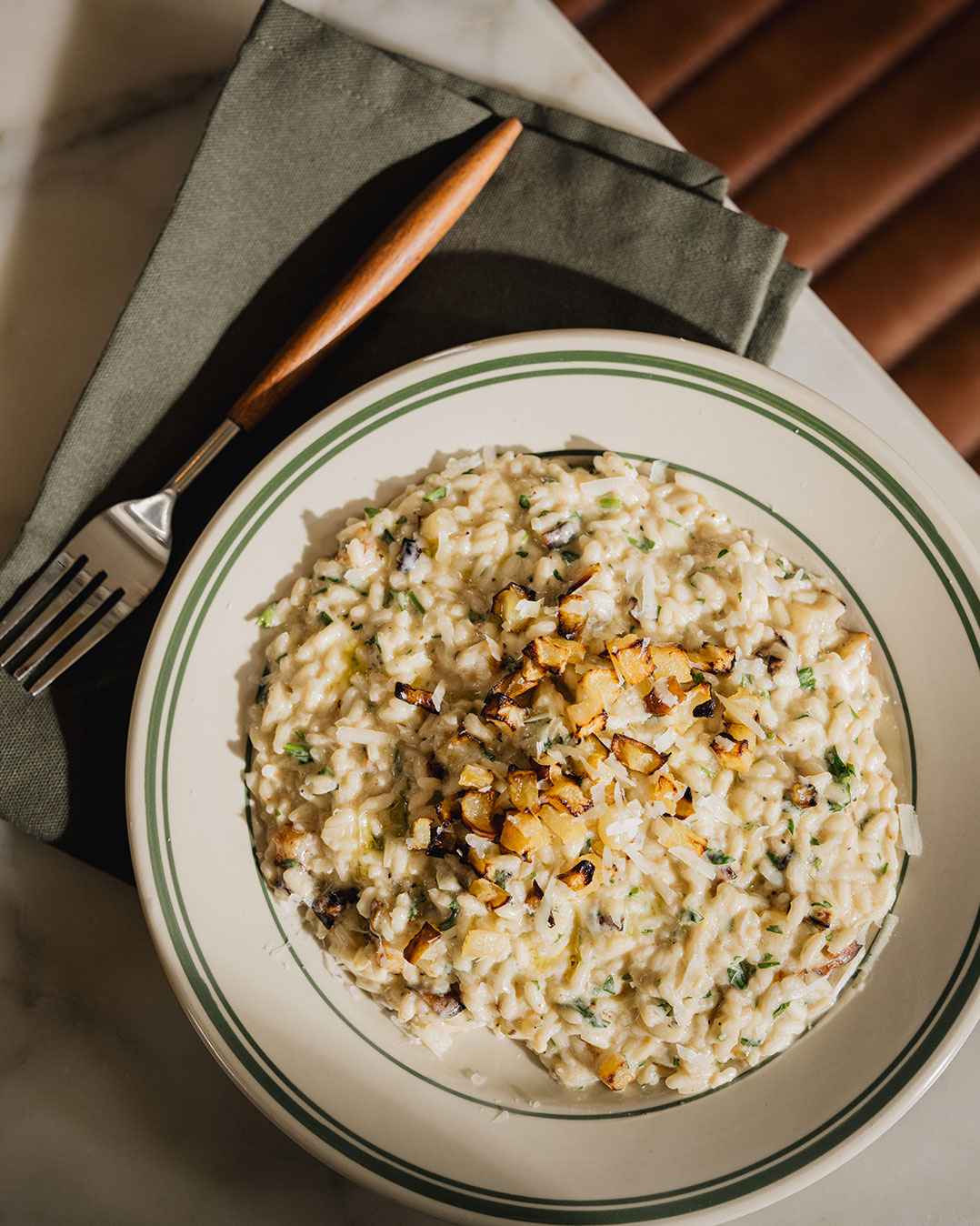
Cacio e pepe risotto with pears
It may sound unexpected at first, but pear and Pecorino get along remarkably well. The sweetness of the fruit plays off the salty, peppery sauce, all wrapped up in a creamy risotto.
Sweet meets salty, Roman style.

A North American classic meets a Roman one.
The sauce brings the creaminess and cheese; the black pepper gives the whole thing just enough personality to push mac and cheese out of its comfort zone.
Mushrooms, spinach, pasta and cacio e pepe: you definitely don’t need meat to make a seriously satisfying lasagna.
Here, the sauce takes the place of a traditional white sauce and brings everything together with plenty of creaminess and just enough pepper.
After that? Gnocchi, roasted potatoes, grilled vegetables, pizza bianca…
Let’s just say the road to Rome doesn’t have to be a straight one.

Three ingredients. One Roman classic.
Maybe that’s one of the things we love most about Italian cooking: it doesn’t always need to do a lot to accomplish a lot.
Good cheese. Black pepper. Pasta. A technique you get a little better at every time you make it.
And somehow, a very simple dish becomes inseparable from an entire city.
Generations later, we’re still making cacio e pepe, discussing it, comparing techniques and, most importantly, eating it.
We simply gave it our own little twist. Rome has never been this close.
Frequently asked questions about cacio e pepe
What does cacio e pepe mean?
Cacio e pepe literally means “cheese and pepper” in Italian. The traditional Roman dish combines pasta, Pecorino Romano, black pepper and starchy pasta cooking water to create its creamy sauce.
Where does cacio e pepe come from?
Cacio e pepe is closely associated with Rome and the surrounding Lazio region. According to the traditional story, it has pastoral roots: shepherds carried foods that were easy to preserve, including dried pasta, aged Pecorino and black pepper.
What cheese is used in cacio e pepe?
The traditional cheese is Pecorino Romano, a firm Italian cheese made from sheep’s milk. Its bold, salty and slightly sharp flavour is one of the defining characteristics of the dish.
Does traditional cacio e pepe contain cream?
No. Traditional Roman cacio e pepe doesn’t contain cream. Its creamy texture comes from the emulsion created by Pecorino Romano and starchy pasta cooking water.
Stefano Cacio e Pepe Sauce is instead a creamy interpretation of the classic and contains cream.
Why does my cacio e pepe get clumpy?
Temperature is often the culprit. If Pecorino gets too hot, its proteins can tighten and the cheese can clump instead of melting smoothly into the sauce. Very finely grated Pecorino, starchy pasta water and gentle heat make it easier to create a smooth emulsion.
What is the difference between cacio e pepe and Alfredo?
Both are classic Italian sauces with a creamy texture, but their ingredients and flavour profiles are quite different. Traditional cacio e pepe is made with Pecorino Romano, a hard sheep’s milk cheese, along with black pepper, a much more central ingredient than in Alfredo. Traditional Alfredo sauce, on the other hand, is made with Parmigiano Reggiano, a hard cow’s milk cheese, and butter. In both cases, the creamy texture traditionally comes from emulsifying the cheese and fat with pasta cooking water rather than adding cream. The Alfredo sauce popularized in North America is generally richer and made with cream, butter and Parmesan.
Why does Stefano Cacio e Pepe sauce contain cream?
Traditional cacio e pepe doesn’t contain cream, but a sauce designed to be packaged and shelf-stable has different requirements than one prepared fresh to order. The Stefano recipe has been adapted to deliver a smooth, consistent texture and good stability, with cream helping create that signature creamy texture. Pecorino Romano DOP and freshly cracked black pepper remain at the heart of the sauce.
Can I make cacio e pepe ahead of time?
Traditional cacio e pepe is best prepared and served right away. Because the sauce relies on a delicate emulsion between Pecorino Romano and starchy pasta water, it can separate or become grainy as it cools and is reheated. For the creamiest texture, make it just before serving.
How should I reheat Stefano Cacio e Pepe sauce?
Warm the sauce gently in a saucepan over low heat, stirring regularly. Avoid bringing it to a boil, as this can affect its texture. For an even silkier sauce, add a splash of pasta cooking water when tossing it with your pasta.
Can I use Cacio e Pepe sauce for more than just pasta?
Absolutely! Try it in a creamy risotto, use it to give mac and cheese a cacio e pepe twist, layer it into a vegetarian lasagna with mushrooms and spinach, or drizzle it over roasted vegetables. There’s more than one way to get your cacio fix!
What pasta is best for cacio e pepe?
Tonnarelli and spaghetti are classic choices in Rome. Bucatini are another delicious option, while short shapes such as rigatoni and mezze maniche can also hold the sauce beautifully.


