
The Complete Guide to Perfect Risotto (and the 10 Mistakes to Avoid)
The basic recipe, essential techniques, and common mistakes to avoid for perfect risotto every time.

Risotto is a traditional Italian dish made with high-starch rice, typically Carnaroli, Arborio, or Vialone Nano. Unlike most rice dishes, risotto is cooked gradually by adding hot stock one ladle at a time, creating its signature creamy texture.
It may have originated in Northern Italy, but like many Italian classics, there are almost as many versions as there are families. From the iconic Risotto alla Milanese with saffron, to seafood-loaded Risotto allo Scoglio, every region has its own way of making it the way.
And while risotto isn’t the hardest Italian dish to master… it is one of the easiest to mess up. One wrong move and suddenly you’ve got rice soup. Or rice glue.
The good news? With the right ingredients, a few simple techniques, and a little patience, it’s entirely possible to make creamy, glossy, perfectly al dente risotto at home.

How to Make Italian Risotto: The Basic Recipe
Choosing the right rice is essential.
Carnaroli rice is widely considered the gold standard for risotto thanks to its ability to absorb flavour while maintaining an excellent texture. If you can’t find it, Vialone Nano or Arborio will do — but if Carnaroli is on the shelf… grab it.
In a pan, sauté finely chopped onion in olive oil + a little butter. Pro tip: your onion pieces should be smaller than the rice grains. Cook it low and slow until soft (no browning). If it starts to dry out, add a splash of hot stock.
Add the rice (about 80 g / 3 oz per person) and toast it for a few minutes together with the onion. You want the grains coated, warmed through, and ready to absorb flavour. This step, known as tostatura.
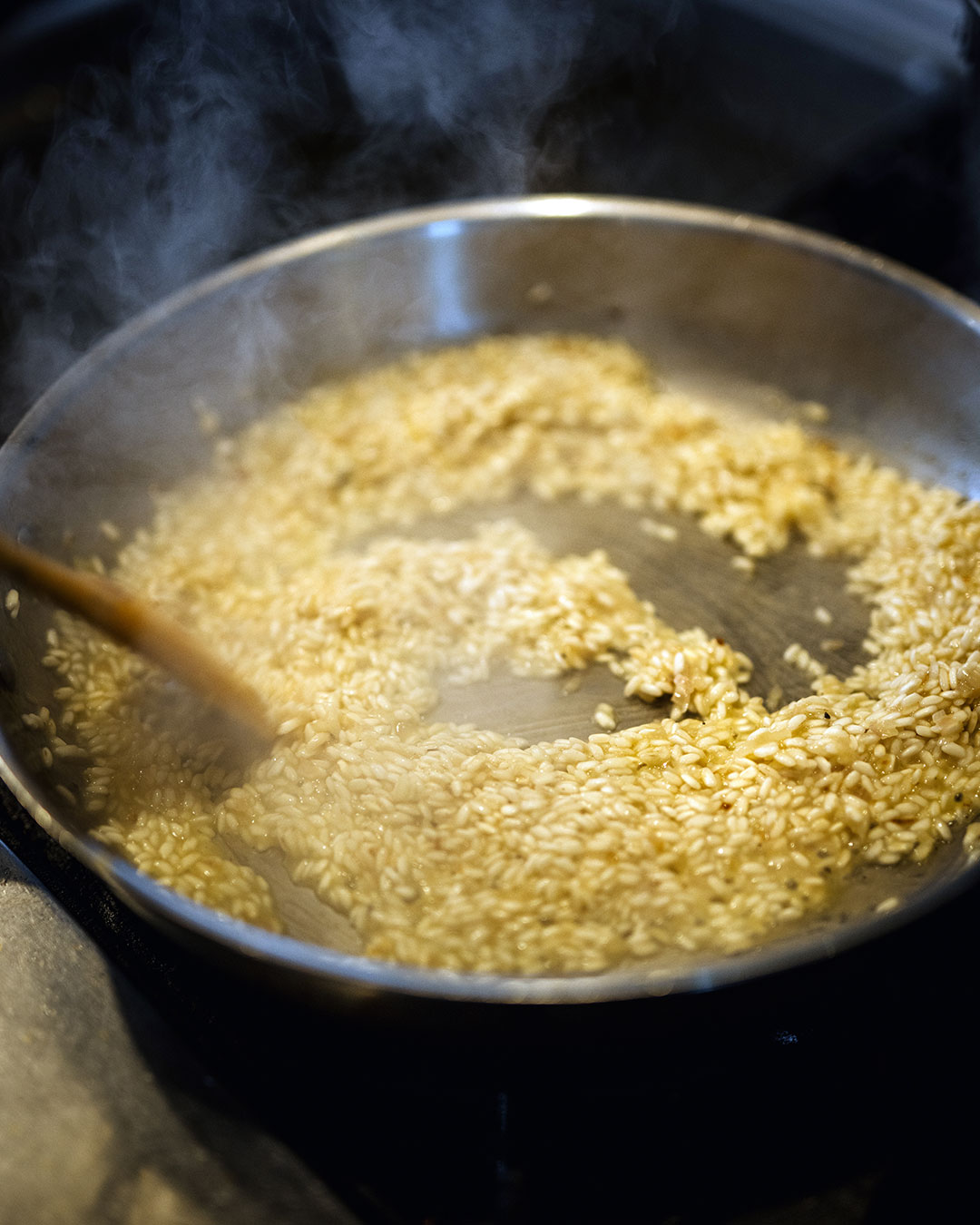
Deglaze with a splash of white wine (or another alcohol that complements your recipe) and let it evaporate completely. Let it evaporate completely — that’s where the magic starts.
From there, the rhythm of risotto begins: add hot stock one ladle at a time, stirring gently as it is absorbed. Continue until the rice is tender while still maintaining a slight bite (al dente), and the texture is creamy — not watery.
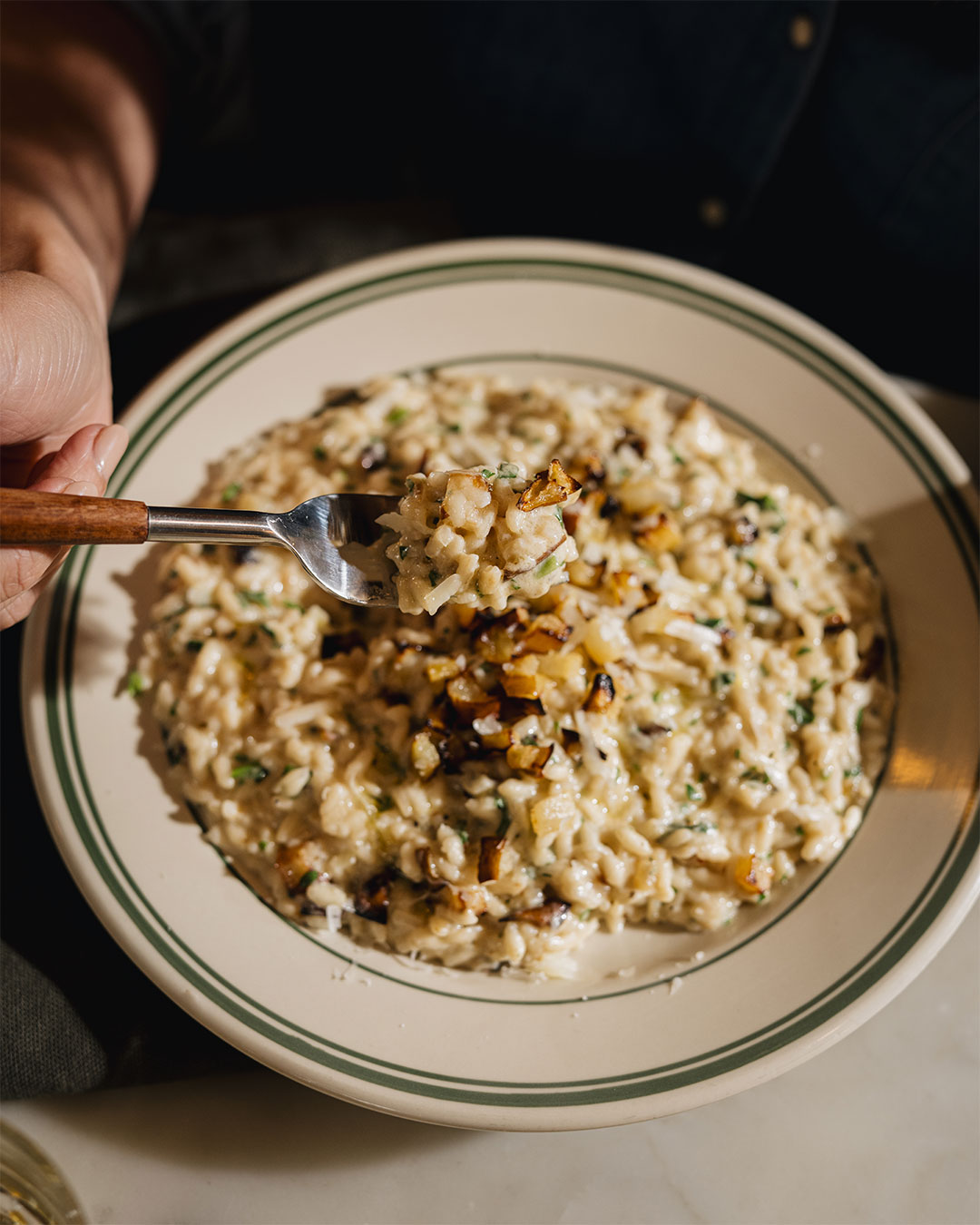
Once the rice is cooked, remove the pan from the heat and move on to the most important step: mantecatura. Add a knob of butter and, if desired, grated Parmigiano Reggiano. Stir gently until the risotto becomes silky, creamy, and glossy.
Serve immediately — risotto waits for no one.
Plate it right away and finish with Parmigiano if you want.
Once you’ve mastered the base, you can add pretty much anything: mushrooms, shrimp, roasted veggies, sausage, lemon zest, herbs… and switch up the stock (chicken, veggie, seafood) depending on the vibe.

10 Risotto Mistakes to Avoid
1. Using the wrong rice
Great risotto starts with the right ice. Period.
Go for the classics: Carnaroli, Arborio, or Vialone Nano. Anything else and you’re likely heading toward a bowl of disappointment.
2. Rinsing the rice
Never rinse risotto rice.
You’ll wash away the starch that creates the rich, creamy texture everyone loves. And honestly, that’s kind of the whole point of risotto.
3. Skipping the toast (the tostatura)
Toast your rice. Always.
This brief step builds flavour and helps the grains stay firm throughout cooking. Don’t worry — it won’t burn if you keep it moving. A few minutes that make all the difference.
4. Forgetting the splash (wine, please)
A little wine for the cook, a little wine for the risotto.
White wine (or red wine for certain recipes, such as a risotto allegro) adds acidity, balances flavours, and lifts all those delicious bits from the bottom of the pan. It’s often what takes a risotto from good to great.
5. Using cold stock
Cold stock = broken rhythm.
Keep your stock hot, always. Risotto likes consistency, not surprises.
6. Stirring like it owes you money
Yes, stir… but don’t overdo it.
Too much stirring releases too much starch and can leave your risotto gluey instead of creamy. Gentle love only.

7. Scraping the Bottom of the Pan
If a few grains decide to stay behind, let them.
Risotto should be silky — not half creamy, half crunchy.
8. Skipping the Mantecatura
This is where the magic happens.
At the end, off the heat, add butter and Parmigiano, then stir gently until the risotto becomes glossy and velvety.
No direct heat. No aggressive stirring. Just a little finesse.
9. Letting it sit
Risotto continues cooking even after it leaves the stove.
Serve it immediately. Perfect risotto has a fairly short window of glory, and a few extra minutes can make all the difference.
10. Reheating it like any other leftovers
Risotto isn’t a “tomorrow lunch” kind of dish. It’s a right now moment.
But if you have leftovers, transform them into something equally Italian and delicious: arancini, supplì, or even a frittata.

Frequently Asked Questions About Risotto
What is the best rice for risotto?
Carnaroli is generally considered the best rice for risotto thanks to its ability to absorb flavour while maintaining a firm texture. Arborio and Vialone Nano are also excellent choices.
Can you make risotto without wine?
Yes. Wine adds acidity and depth, but it can be replaced with a small amount of lemon juice or simply omitted.
Why is my risotto sticky?
Risotto often becomes sticky when it is over-stirred, contains too much liquid, or is made with the wrong type of rice.
Can you reheat risotto?
Yes, but the texture will be different. Leftovers are often better transformed into arancini, supplì, or frittata.


