Main dishes
Homemade ricotta and spinach ravioli

Preparation
1 hr 15 min
Cooking time
3 min
Portions
4 - 6
Ingredients
FOR THE FRESH PASTA
FOR THE FILLING
Preparation
FOR THE PASTA DOUGH
- Place the flour on a clean work surface and make a well in the centre.
- Add the eggs and olive oil to the well.
- Using a fork or your fingers, lightly beat the eggs while gradually incorporating the flour. Once the dough starts to come together, knead it with your hands. If the dough is too dry, add the water, 1 tablespoon at a time, until you have a soft, non-sticky dough. Knead for 8 to 10 minutes, until smooth and elastic.
- Wrap the dough in plastic wrap and let it rest at room temperature for 20 to 30 minutes.
FOR THE FILLING
- Heat a drizzle of olive oil in a large skillet over medium heat. Add the spinach and cook for 2 to 3 minutes, until completely wilted. Transfer the spinach to a plate and let cool.
- Once cool enough to handle, squeeze the spinach thoroughly in a clean kitchen towel (or with your hands) to remove as much excess water as possible. Finely chop the spinach.
- In a bowl, combine the ricotta, chopped spinach, Parmigiano Reggiano, egg, nutmeg, salt and pepper until well combined.
- Cover and refrigerate while preparing the pasta.
ROLLING OUT THE PASTA
- Secure the pasta machine to a stable work surface. Set the rollers to the widest setting.
- Cut off a piece of dough about 3 cm thick and flatten it slightly with your hands. Keep the remaining dough covered to prevent it from drying out.
- Pass the dough through the rollers, then fold it in half. Repeat 3 or 4 times, until the dough is smooth and even.
- Gradually reduce the roller setting one notch at a time, passing the dough through only once at each setting, until you reach the desired thickness. For ravioli, many prefer stopping at the second-to-last setting for a slightly sturdier pasta.
- Lightly dust the pasta with semolina as needed to prevent sticking. Prepare one sheet of pasta at a time, keeping the remaining dough covered with a clean kitchen towel.
ASSEMBLY
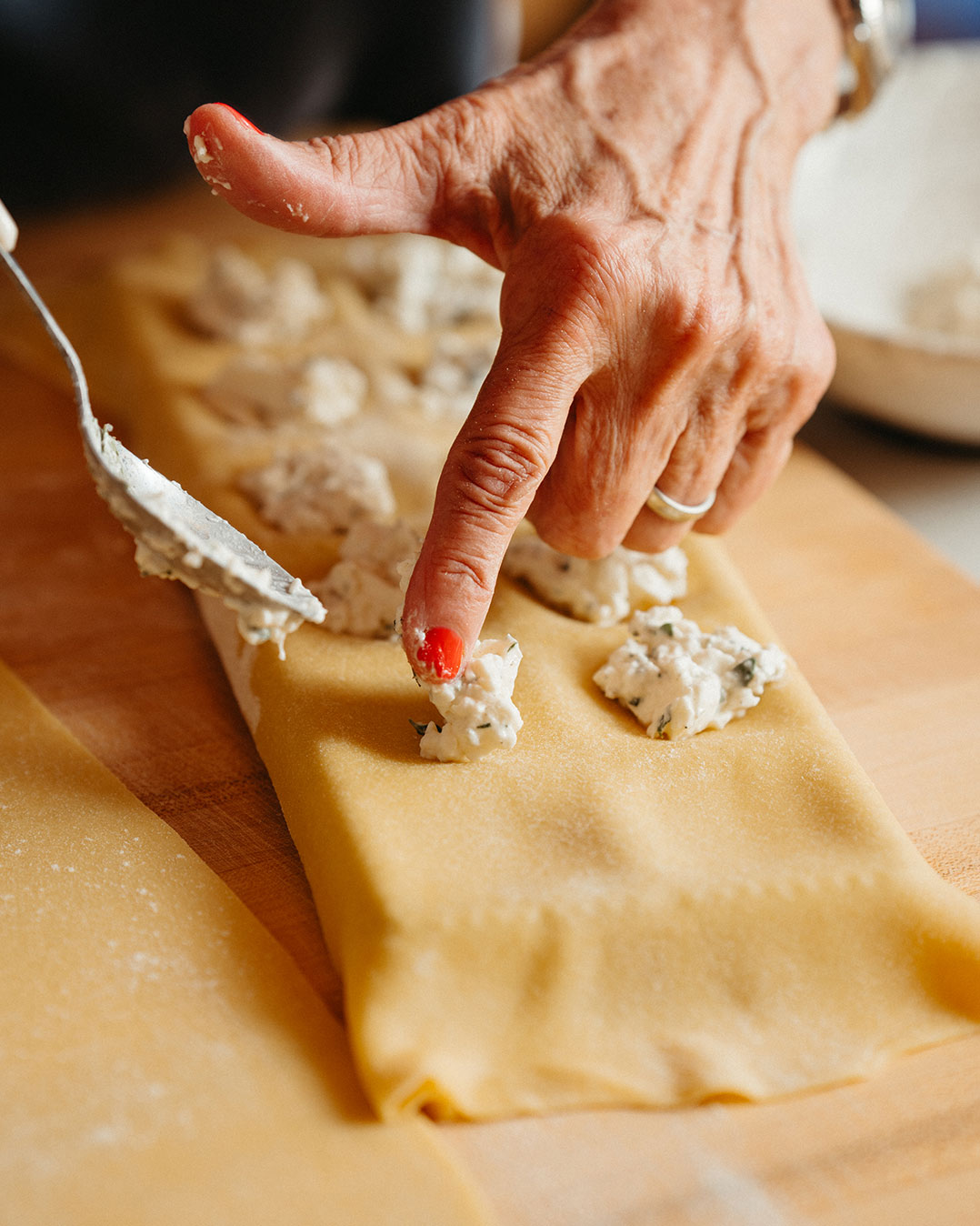
- Place a sheet of pasta over the ravioli mold.
- Spoon the filling into each pocket, being careful not to overfill.
- Using a pastry brush or your fingertips, lightly moisten the edges of the pasta around each portion of filling.
- Place a second sheet of pasta over top. Firmly roll a rolling pin over the mold to seal the ravioli and remove the excess pasta.
- Carefully turn out the ravioli and place them on the prepared baking sheet, making sure they don't touch.
COOKING
- Bring a large pot of generously salted water to a boil.
- Cook the ravioli for 1 to 3 minutes, or until they float to the surface. Reserve about 125 ml (½ cup) of the pasta cooking water before draining the ravioli.
- Gently transfer the ravioli to the sauce of your choice. Add a little pasta water as needed to loosen the sauce and help it become silky and smooth.
-
Gently toss to coat the ravioli and serve immediately, topped with freshly grated Parmigiano Reggiano. Buon appetito!
FAQ
-
Can I make the ravioli ahead of time?
Yes! The ravioli can be assembled a few hours in advance and kept refrigerated on a semolina-dusted baking sheet, covered with plastic wrap or a clean kitchen towel. -
Can I freeze homemade ravioli?
Absolutely. Arrange the ravioli in a single layer on a semolina-dusted baking sheet and freeze until firm. Transfer them to a freezer bag or airtight container. Cook directly from frozen, adding 1–2 minutes to the cooking time. -
Why is it important to squeeze the spinach dry?
Spinach contains a lot of moisture. Removing as much liquid as possible helps create a firmer filling and prevents the ravioli from becoming soggy or bursting while cooking. -
How do I know when the ravioli are done?
Fresh ravioli usually float to the surface when they're cooked. Let them cook for another 30–60 seconds after they float, then remove them gently with a slotted spoon. -
Can I make the pasta dough without a pasta machine?
Yes! Roll the dough out as thinly as possible with a rolling pin on a lightly floured surface. The ravioli may be slightly thicker, but they'll still be delicious. -
Where can I find the ravioli mold?
The ravioli mold used in this recipe is available from Quincaillerie Dante, in-store or online.